

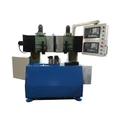
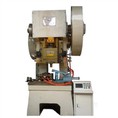
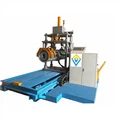
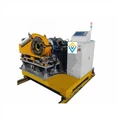
Strip Steel Forming Machine
What is Strip Steel Forming Machine
The working principle of the steel strip forming machine is mainly based on the plastic deformation of metal. In the roll forming system, the pressure between the roller and the die causes the steel strip to undergo plastic deformation and gradually press into the desired shape. In the cooling system, rapid cooling can promote the formation of metal grains and improve the strength and hardness of the steel strip. In the receiving system, the coiler coils up the formed steel strip for subsequent processing or direct use.
Efficient production
The strip forming machine adopts advanced production technology and equipment, which can quickly and accurately complete the forming process of steel bars and improve production efficiency.
High precision
The strip forming machine adopts high-precision molds and processing equipment, which can ensure the dimensional accuracy and shape accuracy of steel bars and meet the needs of different products.
High degree of automation
The strip forming machine adopts an automated control system, which can realize the entire process of automatic feeding, processing, and discharging, reducing the labor intensity of workers and improving production efficiency.
Good safety
The strip forming machine adopts safety protection measures, which can effectively avoid accidents and ensure the safety of operators.
Wide range of applications
The strip forming machine is suitable for processing steel bars of various specifications and shapes, which can meet the needs of different fields.


Why Choose Us
Customer Service
We firmly believe that we offer THE BEST customer support in the industry and it is our ongoing goal to continually improve on our services. As an independently owned and operated business, we are able to provide the most accommodating service possible.
Advanced equipment
We take strong measures to ensure that we use the highest quality equipment in the industry and that our equipment is regularly and meticulously maintained.
Rich experience
Has a long-standing reputation in the industry, which makes it stand out from its competitors. With over many years of experience, they have developed the skills necessary to meet their clients' needs.
Efficient and convenient
The company has established marketing networks around the world to provide high-quality services to customers in an efficient and convenient manner.
Quality assurance
In terms of quality assurance, the company strictly follows the standards and norms of the industry quality system. Adopt industry-leading testing equipment to ensure product quality and good reputation.
State-of-the-art technology
We use the latest technology and tools to deliver high quality services. Our team is well-versed in the and advancements in technology and uses them to provide the best results.
Universal Roll Forming Machine
A universal roll forming machine is the most versatile type of machine, capable of performing a variety of tasks. They can be used to create everything from simple shapes to complex parts with multiple curves.
Thread Rolling Machine
A thread rolling machine is designed specifically for creating threads on fasteners and other small parts. These machines use a series of dies to roll the threads onto the part, providing a stronger and more precise grip than traditional threading methods.
Wire Forming Machine
A wire forming machine is used to create all kinds of shapes out of wire. These machines can bend, twist, and cut wire to create anything from simple hooks to complex sculptures.
Hydraulic Press
A hydraulic press is a powerful machine that uses high-pressure fluid to shape metal and other materials. Hydraulic presses are typically used for stamping, forging, and sheet metal working applications.
Laser Cutting Machine
A laser cutting machine uses a high-powered laser beam to cut through materials like metal, glass, or plastic. Laser cutting machines are often used for precision applications such as creating electrical components or medical devices.
What Raw Materials Can Be Used in the Strip Steel Forming Machine
Roll forming is the process of forming a metal coil into a desired shape. During this process, the metal coils are formed by a set of forming rolls. Each frame forming roll gradually bends the metal until it reaches the desired shape. A variety of metals are used in roll forming systems such as aluminum, pre-painted galvanized steel coil, galvanized steel, stainless steel, etc. Roll formed parts are used in many industries such as steel construction, PEB construction, construction, railway and many others.
The forming process of the forming machine, which is a good technology for mass production of long metal profiles. Roll forming machines can ensure the consistency of the cross-sectional profile of the part and are a good solution. Many parts can be produced using a roll forming machine, such as highway guardrails, roof systems, wall systems for industrial plants, door frames, fence posts, decks, purlins for steel buildings, etc. The continuous rolling of a roll-formed part through a roller die allows closed or open profiles. These profiles have huge applications in manufacturing, commercial construction, aerospace and other applications.
What Are the Application Scenarios of Strip Steel Forming Machine
Mechanical manufacturing
Forming machines are widely used in the field of mechanical manufacturing. Parts processing, thread making, hole processing and other processes all require metal forming machines to complete. The mechanical manufacturing industry has high requirements for forming accuracy and processing efficiency. Metal forming machines can meet these requirements and ensure product consistency and quality stability.
Home appliance manufacturing
Presses and shearing machines are widely used in the home appliance industry to produce various electrical iron shells and parts.

Automobile manufacturing
The automobile industry is one of the important application fields of forming machines. In the process of automobile manufacturing, metal materials need to go through processes such as forming, stamping, and welding. Metal forming machines can provide efficient and precise processing capabilities. At the same time, metal forming machines can also meet the requirements of material strength and hardness in the automobile manufacturing process to ensure the quality and safety of automobile parts.
Aerospace
The application of various forming machines in the aerospace field is indispensable, such as the manufacture of aircraft shells and engine parts.
How Does a Strip Steel Forming Machine Work
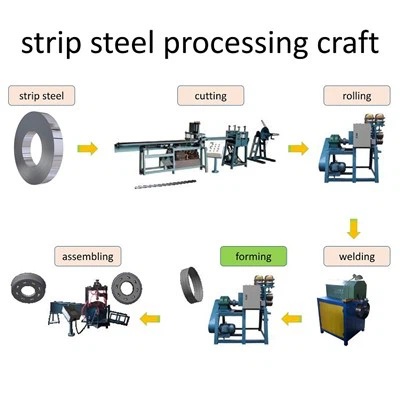
A forming machine accomplishes the fabrication process by sending sheet metal—most commonly coiled steel—through a series of fixed rollers, which continuously and incrementally bend the metal into the required form. By progressively bending the metal bit by bit at strategically spaced rollers, manufacturers can customize cross-sectional shapes with exacting precision and uniformity. A typical speed for roll forming machines is anywhere from 30 to 100 feet of metal per minute, ensuring an incredible ongoing output of material.
Typically at room temperature, metal coils or sheets feed into rollers that guide the material to the first of the bending stations. Once there, a roller will precisely bend the metal and then drive it forward through the machine to the next station. Each station will continue to shape the component by bending it a little more, with capabilities for unique and complex part designs. The more contoured the design, the more roller stations the part will pass through.
After the metal makes its way through the rollers, the workpiece enters the cut off press, which cuts the metal to its specified length. Despite the nearly limitless length options, roll forming machines require only one set of tools for generating cuts. This machinery can also offer other in-line services such as welding or punching.
The finished component emerges onto a roller conveyor for a worker to retrieve. This is one of the few stages that may involve manual processing. Added technology can run the machinery, precisely placing the metal for optimal cutting and checking for imperfections while reducing labor costs and material waste.
The formed end product will require minimal finishing work, if any, before packaging or storage. This is due to roll forming' s capabilities for producing finely detailed components with continuous finishes and few seams.
Injection molding machine
The injection molding machine is the core component of the molding machine. Its function is to inject heated and molten plastic into the mold to form the shape of the desired product. Its working principle is to heat and melt the plastic particles, and then inject the molten plastic into the mold with high pressure.
Mold
The mold is an indispensable part of the molding machine and is a molding tool used to mold products. Its design should be determined according to the shape and size of the product, which can determine the quality and production efficiency of the product. The size varies and is divided into single-cavity molds and multi-cavity molds.
Nozzle
The nozzle is a connecting device that transports the molten plastic from the injection molding machine to the mold. Its structure has a direct impact on the injection molding process and production efficiency. Generally speaking, it consists of a nozzle body and a conical ring.
Heater
The heater is a device that heats and melts the plastic. Its function is to heat the plastic particles to a plastic state, which is convenient for the injection molding machine to inject into the mold. It can be an electric heater or a hot water/hot oil circulation heater.
Cooling system
The cooling system is a device used to cool the molten plastic in the mold. The cooling speed must be controlled within a certain range and cooled and controlled through water or gas circuits.
The global strip forming machine market size was valued at USD 472.6 million in 2021 and is expected to reach USD 756.73 million by 2032, at a CAGR of 4.4% during the forecast period.
The strip forming machine market is witnessing substantial growth owing to the increasing demand for precision in metal forming processes across industries. With the evolution of manufacturing practices and the emphasis on efficiency, there is a growing awareness of the critical role played by advanced strip forming machines. Companies in the industry are actively investing in R&D to enhance machine capabilities and ensure that they meet the evolving demands of modern metalworking applications. The industry’s commitment to innovation and adaptability has enabled it to continue to grow, reflecting its readiness to meet the dynamic requirements of contemporary metal forming needs.
Innovation and adaptability are the key drivers shaping the forming machine market, which is able to expertly respond to the evolving demands of various industries. The focus on precision in metal forming processes is in line with the need for high-quality output and efficient production in industrial environments. Despite market fluctuations, the industry remains steadfast in its commitment to enhancing machine capabilities, complying with regulatory standards, and addressing emerging challenges, highlighting its commitment to providing effective roll forming solutions for evolving metalworking applications.

Maintenance Content of Strip Steel Forming Machine Equipment
Daily cleaning
Regularly clean the outer surface of the molding machine equipment to remove dust, impurities, etc. You can use a clean rag or brush for cleaning, and avoid using corrosive detergents.
Lubrication maintenance
Regularly lubricate the lubrication parts of the molding machine equipment to ensure the normal operation of the equipment. You can use an appropriate amount of lubricating oil or grease for lubrication, and arrange the lubrication cycle according to the use of the equipment and the requirements of the manufacturer.
Parts inspection
Regularly check the various parts of the molding machine equipment to ensure that they are intact. If problems such as wear, looseness or damage of parts are found, replace or repair them in time to ensure the working efficiency and safety of the equipment.
System detection
Regularly inspect the system of the molding machine equipment to ensure the normal operation of each system. For example, electrical system, hydraulic system, pneumatic system, etc., not only check their operating status, but also pay attention to the cleanliness and sealing of the system.
Working environment maintenance
Maintain the working environment of the molding machine equipment and keep it clean and tidy. Avoid dust and foreign matter from entering the equipment, which may affect the equipment's operating performance and lifespan.
Shutdown maintenance
When the molding machine is shut down, necessary maintenance must be performed on it. For example, turn off the power, clean the inside of the equipment, check for equipment failures and abnormalities, etc., to ensure the safety and reliability of the equipment.
Our Factory
Guangzhou Deya Machinery Manufacturing Co. Ltd, national high-tech enterprise, is a science and technology service enterprises focusing on PHC pipe pile products industry with the core of technological innovation + service + big data application. Deya company provides the overall solution of intelligent production of cement products to customers, including the research and development of professional intelligent equipment, the cultivation of professional talents and provision of site management solutions, and so on.


Certifications


FAQ
We're professional strip steel forming machine manufacturers and suppliers in China, specialized in providing high quality customized service. We warmly welcome you to buy or wholesale discount strip steel forming machine in stock here from our factory. Good service and low price are available.
PHC Pipe Pile Strip Steel Forming Machine, Automatic Processing Line Of Strip Steel and Flange, Strip Steel Cutting Machine