

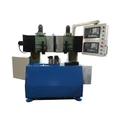
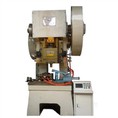
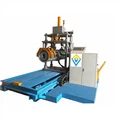
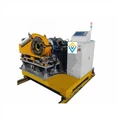
Feeding Machine
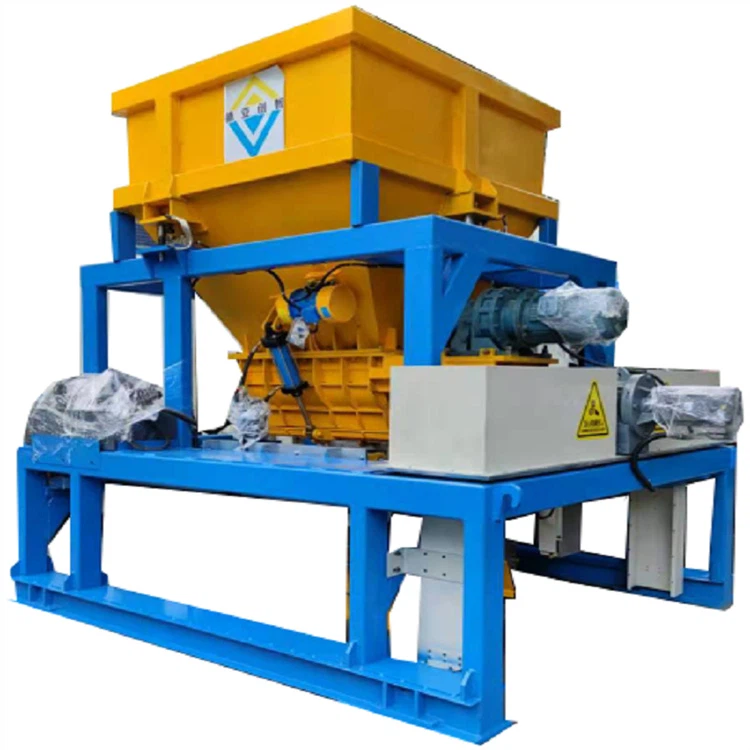
Feeding Machine is widely used in various materials, including powder, fiber, and flake materials with poor fluidity. All parts in contact with the material are made of stainless steel. The feeder is easy to clean and replace parts.
Increased Productivity
By eliminating manual labor from repetitive tasks, the use of a feeding machine can help increase productivity significantly. The machine is able to work faster and more efficiently, leading to increased production speeds while also reducing costs associated with manual labor.
Improved Accuracy
With a feeding machine, the accuracy of the feed is greatly improved due to the precision of the machine and its ability to make small adjustments in order to guarantee a consistent product size. It ensures that each product or material is precisely fed into an assembly line or other processing machinery.
Reduced Material Waste
As the feeder can make precise adjustments to ensure consistent product size and uniformity, it helps reduce material waste that would otherwise occur from manual feeding operations. This helps companies to save on costs associated with wasted materials and can help increase overall profitability.
Improved Safety
The use of a feeding machine ensures that employees are not exposed to potentially hazardous conditions during manual feeding tasks, as the machine does all of the work for them. This helps keep workers safe and healthy while also minimizing the risk of injury or illness.
Versatile
Feeding machines can be used in a variety of settings, ranging from small assembly lines to large manufacturing plants. They can also handle different types of materials, such as plastics, metals, and more. This allows companies to customize their feeding operations according to their specific needs.
Easy to Maintain
Feeding machines are easy to maintain and can be kept in good working order with regular cleaning and lubrication. This helps companies save on repairs and maintenance and reduce any downtime that could occur due to unexpected machine failures.
Easy integration
Industrial feeding machines are designed to integrate seamlessly into existing production systems. It helps companies save on time and money associated with customizing their assembly lines or purchasing additional equipment for the installation process. In addition, the machines can also be modified to fit specific applications, making them even more versatile and cost-effective.


Why Choose Us
Customer Service
We firmly believe that we offer THE BEST customer support in the industry and it is our ongoing goal to continually improve on our services. As an independently owned and operated business, we are able to provide the most accommodating service possible.
Advanced equipment
We take strong measures to ensure that we use the highest quality equipment in the industry and that our equipment is regularly and meticulously maintained.
Rich experience
Has a long-standing reputation in the industry, which makes it stand out from its competitors. With over many years of experience, they have developed the skills necessary to meet their clients' needs.
Efficient and convenient
The company has established marketing networks around the world to provide high-quality services to customers in an efficient and convenient manner.
Quality assurance
In terms of quality assurance, the company strictly follows the standards and norms of the industry quality system. Adopt industry-leading testing equipment to ensure product quality and good reputation.
State-of-the-art technology
We use the latest technology and tools to deliver high quality services. Our team is well-versed in the and advancements in technology and uses them to provide the best results.
Types of Blanking Machine
There are robot, sheet servo feeder, air sheet feeder, automatic take-up feeder. It is not necessary to use the coil material as the raw material, and it can be used for continuous stamping and blanking operations with single die, composite die and progressive die. The working efficiency is 2 to 10 times of manual and no one is negligent. The sheet feeder developed by our company has strong versatility, wide application, suitable size and thickness. A feeder can be easily installed on any punching machine. It is very convenient to install and debug. It can be adapted to small batches and multiple specifications of automatic production, and can be adapted to medium and large batches of automated production.
Automatic feeding feeder, automatic feeding feeder, automatic feeding feeder, automatic feeding feeder. The strip feeder is tailored to the customer’s machine and materials. The stack of materials is stacked on the rack, automatically transported by the robot, and automatically fed and stamped. If there is too much oil between the materials, the two pieces of material stick together and are handled by the customer. The manipulator is installed on both sides of the machine tool mold, and the mold opening distance needs to be greater than 300mm. Suitable for automatic material cutting and stretching of large board materials. The product needs to automatically fall under the mold.
There are servo feeder, three-in-one feeder, air feeder, high-speed roller feeder, left and right swing feeder, servo yaw feeder, leveling feeder, left and right shift feeder. The coil feeder is suitable for continuous production of coil material, and a kind of feeder for continuous feeding, which can produce continuous coil feeders: air feeder, high speed roller feeder, servo feeder, swing feeder.
The roller feeder is the most widely used feeding device at present. The principle is to connect the output shaft of the punching rod through the connecting rod, and the punching press drives the operation. The feeder is adjusted by adjusting the yaw amplitude of the eccentric disk. Feed length. Advantages of high-speed roller feeder: high feeding accuracy, high speed, no additional energy supply, and extremely low failure rate. Disadvantages of high-speed roller feeder: Due to the limited eccentricity of the eccentric disk, the maximum feeding length can only reach 300mm, and the feeding step adjustment is inconvenient. The punching machine needs the output shaft to be installed.
Air feeder is the earliest feeding equipment used in the stamping industry. Its principle is to use the air source as the power, clamp the material through the cylinder, feed the cylinder by the telescopic stroke, and adjust the feeding length through the cylinder. The length of the trip is controlled. Air feeder advantages: easy to operate, easy to install, affordable, and can achieve automatic stamping feeding equipment at the lowest price. In actual production, it is mainly used for feeding of stamping products with low precision and fast speed. Disadvantages of air feeder: easy to damage materials, O-ring wear has an impact on feeding accuracy.
What Are The Components Of A Feeding Machine
Steel
Steel is the most common structural material for feeders. Due to its high strength, wear resistance, and corrosion resistance, it is widely used in the structure of feeders. Most heavy-duty feeders and machines that need to withstand heavy-load feeding use steel as the feeding structural material.
Cast iron
Due to its high strength and hardness, cast iron is very suitable for manufacturing parts that are prone to wear in the structure of feeders, such as feed rollers and feed gears. In addition, cast iron also has a certain degree of corrosion resistance, but compared with other materials, cast iron is heavier, which may affect the overall weight and transportation of the feeder.
Aluminum alloy
Aluminum alloy is increasingly used in modern feeders due to its light weight, good strength, and corrosion resistance. Using aluminum alloy as the structural material of the feeder can not only reduce the weight of the entire machine, but also improve the transportation efficiency and response speed of the machine.
Plastic
Plastic is a light and tough material. It is not only cheap, but also has excellent corrosion resistance and noise reduction effects. It is used to manufacture lightweight feeding parts in feeders, such as feeding trays, feeding gears, etc. However, plastic also has its limitations, such as not being resistant to high temperatures and low strength, so it cannot be used as the main structural material of the entire feeder.
The Purpose of the Feeder Is
Metal stamping processing
In the process of manufacturing metal parts, auto parts, electronic components and other products, the feeder is used in conjunction with the punch press to accurately transport metal sheets or strips to the stamping area.
Laser cutting processing
In the laser cutting process, the feeder is used to transport metal sheets or strips to the working area of the laser cutting machine. This helps to improve the efficiency and accuracy of the cutting process.
Cold bending forming
In the process of manufacturing metal profiles, pipes and other products, the feeder transports materials to the cold bending forming machine. Such an application ensures the continuous and uniform transportation of materials, which is necessary to ensure the quality of forming.
Process Flow of Automatic Feeder
Feeding preparation
First, you need to prepare workpieces, fixtures, feeders, computers and other equipment, do positioning work such as card positions, then select the formulated feeding plan, and set the program of the feeder.
Debugging
During the debugging process, it is necessary to check whether the various transmission components of the feeder are unobstructed, including the feeder transmission chain, corresponding fixtures, material racks, conveyors, cutting knives, etc., to ensure that the feeder can work normally. Finally, it is necessary to conduct a linkage test run of each component to ensure normal operation.
Operation
Before starting the automatic feeder, you need to check whether the various transmission components, fixtures, and materials are correctly installed, and then input commands to start the feeder through control devices such as computers to perform automatic feeding operations. During the operation, you need to always pay attention to the operating status of the feeder, handle abnormal situations, and regularly inspect and maintain the feeder to extend the service life of the equipment.
Maintenance
The maintenance of the automatic feeder includes keeping the feeder clean, performing daily safety checks, checking whether the electrical, pneumatic, hydraulic and other equipment are operating normally, cleaning the feeder conveyor chain and other parts, replacing wearing parts, etc., to ensure the continuous and stable operation of the equipment.
How to Choose a Feeding Machine
Choose according to the width of the material. When choosing a feeder, you must first determine the actual material width before you can choose the appropriate feeder model and type. If the material width exceeds 200 mm, you should not choose a clamp feeder; if the material width exceeds 500 mm, it is not recommended to choose a roller feeder, and pneumatic feeders and CNC feeders can be used.
Choose according to the thickness of the material. For any type of feeder, the material thickness needs to know the confirmed parameters, and the accurate material thickness range needs to be determined. If the material thickness exceeds 1.5 mm, it is not recommended to choose a clamp feeder; if the material thickness exceeds 3.5 mm, do not choose a roller feeder and a pneumatic feeder; the applicable thickness range of the CNC feeder is the largest, and the model thickness can reach 9 mm.
Choose according to the material of the material. The material of the material is mainly to understand the yield strength and tensile strength, and whether there is special treatment on the surface of the material, whether it needs to be avoided. If the material is soft and the surface requirements are high, if the material is a secondary processing material, the roller can be additionally processed to process the avoidance groove.
Choose according to the feeding length of the stamping. The feeding length is an important basis for the selection of the feeder. The feeding pitch of the clamp feeder, pneumatic feeder and roller feeder has strict restrictions. You need to ask specifically when choosing this model, while the CNC feeder does not need to consider the feeding length.
Maintenance Work of Automatic Feeder
Maintenance cycle
The maintenance cycle is determined according to the use and use environment during production. It is usually recommended to perform maintenance once a month or quarter.
Lubricating oil
The feeder needs to be lubricated during daily use. It is recommended to use high-quality lubricating oil. In the selection and replacement of lubricating oil, the guidance and suggestions of the equipment manufacturer should be followed.
Electrical part inspection
First of all, safety first, the electrical circuit of the feeder should be checked regularly to see if it is compliant and whether the circuit is damaged or burned out. Secondly, check whether each sensor, PLC, touch screen, etc. is normal.
Transmission part inspection
Check whether the transmission part of the feeder is normal. The transmission part includes the main machine, sprocket, chain, plate chain, bearing, etc. It is necessary to check whether the sprocket is loose, whether the chain is tight, and whether the plate chain is damaged.
Our Factory
Guangzhou Deya Machinery Manufacturing Co. Ltd, national high-tech enterprise, is a science and technology service enterprises focusing on PHC pipe pile products industry with the core of technological innovation + service + big data application. Deya company provides the overall solution of intelligent production of cement products to customers, including the research and development of professional intelligent equipment, the cultivation of professional talents and provision of site management solutions, and so on.


Certifications


FAQ
We're professional feeding machine manufacturers and suppliers in China, specialized in providing high quality customized service. We warmly welcome you to buy or wholesale discount feeding machine in stock here from our factory. Good service and low price are available.
Automatic Pipe Mould Closing Machine, Automatic Feeding Machine for Concrete Pile, Automatic Concrete Feeding Machine for Pole Making